
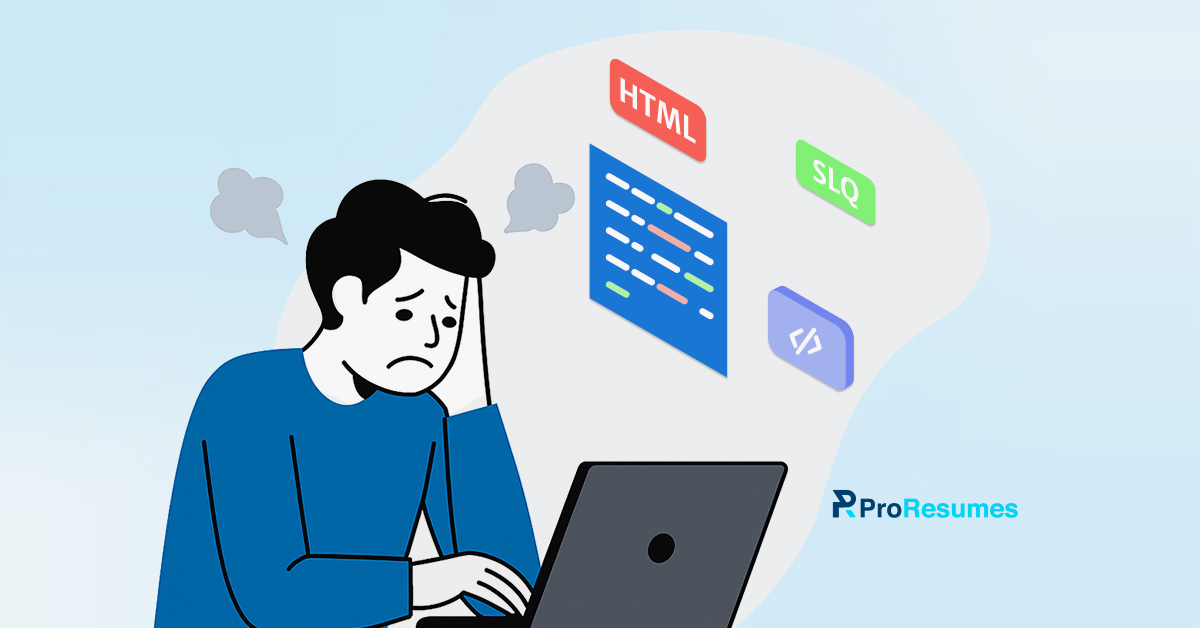
Low on productivity? What does software developer burnout feel like?
Do you know that 80% of software developers are reported to be unhappy with their jobs?
But the question is, why?
Software engineering is a massively expanding job market with financial flexibility and strong career satisfaction elements.
Still, software engineers are unhappy, which is quite shocking and is a result of software developer burnout, which is something way more serious than normal fatigue.
Unlike daily work fatigue or stress, Burnout is a chronic workplace stress that causes mental fog in the mind of a programmer to the extent that they feel completely drained to carry out a productive task after working hours.
It’s not just a fancy word or a new Gen-Z phenomenon, but a critical issue that is plaguing both individual developers as well as the organizations, resulting in high turnover rates, mid-level products, and low levels of productivity and health.
Let’s figure out the symptoms, causes, risks, impact, and how to recover from a software developer burnout, if you’re experiencing one.
What are the symptoms of software developer burnout?
Burnout is something more serious than normal fatigue after a crazy coding session. It can be observed through various Behavioral, social, and psychological factors, so that the problem can be resolved before it causes destruction.
Signs of burnout
- Mental and Emotional fatigue: It is one of the major signs of burnout, as developers experience extreme levels of mood swings, mental detachment from their workplace, and work they once loved.
- Experiencing physical fatigue: Due to burnout, software engineers experience physical exhaustion as well, along with a mental fog. They experience issues such as insomnia, high cholesterol, or high blood sugar levels, along with a weakened immune system.
- Lack of motivation: Another major sign of a software developer’s burnout is that they get extremely demotivated to work on technical tasks involving coding. This eventually results in serious issues like procrastination and low work quality.
Why is employee burnout so common in tech?
With innovations happening every other minute, software developer burnout is a result of the software engineering environment that demands high focus levels, creativity, and problem-solving skills within tight deadlines.
Software developer burnout causes
- Unrealistic goals: Poor project management for complex projects with a lack of proper estimates and possible restraints pressure developers to work rigorously to achieve unrealistic goals.
- Increased workload: Most of the time, developers are overworked due to long working hours, 24-hour remote availability, and impossible deadlines that result in poor work quality, errors, and burnout.
- Repetitious work: Sometimes developers are overloaded with tasks that feel repetitious and mundane, such as fixing code, debugging, and removing errors, which eventually leads to a feeling of stagnation.
- Remote work challenges: As much as remote work opportunities have given flexibility to developers, it has even made it difficult for them by blurring work-life balance, increasing workload, and a sense of isolation.
- Toxic workplace culture: Workplace culture involving a lack of credit, overwork, and minimal to zero appreciation leads to mental exhaustion as well.
Risks and Impacts of burnout for a software developer & the organization
Software developer burnout doesn’t stop at the feeling of brain fog and lower levels of productivity, but it can cause serious damage to the employee and the organization.
How does it impact the employee?
- Low productivity: Software engineers who experience burnout commit major blunders, have low progress rates, and energy to perform better.
- Decreasing Health: Developers often experience a weakened state of their immune system, along with other heart or sleep issues.
- Job dissatisfaction: Employees try to detach themselves from work and show signs of irritation toward work colleagues and family.
- Enhanced Absenteeism: Employees experiencing such chronic stress levels are observed taking leave from work occasionally.
How does it impact the organization?
- Low morale: If one member of the team is struggling, then it automatically affects the entire team, resulting in low morale.
- Decreased innovation: Exhaustion leads to a lower level of productivity as well as creativity, and the IT industry thrives through creativity.
- High turnover rates: Software developer burnout is the most crucial factor that leads to massive turnover, resulting in frequent hirings.
How to recover from a software developer burnout?
Recovering from a software developer burnout isn’t an easy thing; you’ve to go through several life changes to get your health and mind back to a productive phase.
Tips on how to recover from burnout
- Observe yourself: The first step to recover from a software developer burnout is to observe the signs your body is giving you. Acknowledge the symptoms so you can trust them.
- Setting Boundaries: Start by setting boundaries by prioritizing life other than work. Use a time-blocking strategy to focus on significant tasks and don’t be available 24/7.
- Taking regular breaks: As much as your mind wants a break from work, your body deserves it too. Taking regular breaks for five to ten minutes, even between working hours, is necessary.
- Prioritizing yourself: Apart from work responsibilities, having a solid sleep schedule along with regular exercise and a healthy and balanced diet is important to increase productivity and creativity levels.
- Seek help from a professional: If your symptoms are extreme, then you should seek help from a professional to clear out the brain fog and maintain productivity.
How to fix burnout as a software developer without quitting your job?
Here are some simple steps to handle burnout without quitting:
- You’ve to learn to say “NO” to preserve your energy.
- Try to bring change to your work environment.
- Indulge in hobbies after work.
- Communicate with superiors to balance workload.
- Grab the opportunity to work with different technologies.
Is burnout damage permanent or reversible?
Software developer burnout can feel overwhelming if you’re relatively new to the tech industry, but it depends on you to recover from burnout.
To sum it up, you should always be wary of your physical and mental condition and be proactive to work on your lifestyle changes and seek out professional help to mitigate the issue at its roots.
We know software engineering is a stressful job, and maintaining a professional profile is tougher when you’re experiencing severe burnout. Get in touch with Proresume.io and lift this stress off your shoulders with their premium services.
Frequently Asked Questions
Q. Can you reverse job burnout?
Yes, job burnout can be reversed, but it may be a time-consuming process with a multi-layered approach to full recovery. It involves several activities that you can participate in your daily life such as taking regular breaks, learning to say no, setting boundaries, seeking help from a professional and taking care of your mental and physical health.
Q. How many hours a week do software engineers really work?
Software engineers mostly work with a 9-5 routine for 5 days a week. However, every organization has a different set of timings, so on average they work for 40-45 hours a week, but it can sometimes be around 60-70 hours as well if they work overtime or part-time.
Q. Why do developers quit?
Software engineering is a creative as well as analytical job that demands high problem-solving skills from developers to work with code almost straight 8 or 9 hours a day. This often leads to severe burnouts, which result in low productivity levels, mid-level outcomes, and eventually leaving a job for good.
Q. Do software engineers sit down all day?
Not exactly for a whole day, but yeah, most software engineers are responsible for writing or managing code from 9-5, so they basically work while sitting for 6-7 hours or more if they work overtime.
Q. Are software engineers overworked?
It depends on the organizations they work with. Most of the software engineers are overworked if they are competent at their work and get it done fast. According to some developers, large-scale organizations want to get as much development done by an employee in a day as they can.