
Why Landing an Internship During Degree is a Smart Career Move?
90% of people apply for internships after graduation, but have you ever heard that students complete an internship during their degree? In today’s highly competitive, AI-driven job market, candidates need to act smarter and go above and beyond to start their careers, “with or without a college degree.” What do you think about doing an undergraduate internship? Is it possible or not?
With increasing competition for open roles in all industries, your job search and career development should stay ahead of your competitors. Doing an internship while studying will have benefits in your educational and professional journey. According to NACE, 60% of graduate or undergraduate students who complete internships receive full-time job offers.
Unsure how and when to start an internship during a degree? Don’t worry, ProResumes provides a comprehensive, practical guide on all aspects of your professional journey.
What Does an Internship During a Degree Mean?
Do you know what an internship is? It is a temporary, structured working experience offered by organizations to students or recent graduates. It allows individuals to convert their learning into practical skills, industry knowledge, and hands-on exposure in a professional setting. Companies and employers offer both paid and free internships for professional development in the selected career field.
An internship during a degree is rare, but it is a strategic move before graduating and starting a career. This step in your career means you are studying in college while gaining real-world experience in a professional setting as an intern. Learning with experience can make you thrive in 2025 and later on.
How to Get an Undergraduate Internship?
Securing an internship with flexible hours can be challenging, but the right approach can lead you to a paid or free internship during college. Here is the step-by-step guide to landing an undergraduate internship:
- Start Early
Internships in college aren’t common, but this type of awareness is increasing. Don’t wait for companies to post internship opportunities, as fresh graduates will also apply for those internships. Leverage your network, including teachers, family friends, or paid service providers, to help you secure an open internship opportunity. According to reports and ProResumes, it is recommended to begin your search at least 6–8 months before starting the internship season.
- Network Regularly
Utilize social media platforms such as LinkedIn and Facebook to build connections, as professional networking often opens doors to hidden internship opportunities. You can attend job fairs, workshops, and community events to expand your network. Moreover, you can communicate with alumni connections and professors to give you a roadmap for an internship during your degree.
- Be Open to Remote or Part-Time Roles
An internship is not considered a full-time role, but it can lead to a full-time job even when you are in college. Don’t ignore remote or part-time internships if you can’t commit to a full-time internship.
Pro Tip: Internship hours per day vary but generally fall within a range depending on whether the internship is part-time or full-time, as well as the specific requirements of the company or program. Balance between study and internship is important. You need to learn time management skills to succeed in both areas and make your professional life easier.
- Apply to Multiple Platforms
You can find student internship programs on multiple job boards, such as JobGenics, Indeed, and Glassdoor. Don’t depend on a single platform; you need to find internships and apply to all the platforms.
- Build a Strong LinkedIn Profile, Resume, and Cover Letter
Your professional documents and profiles should be optimized, as these are your first impression to recruiters and employers. You need to have an ATS-friendly resume highlighting your academic skills and projects, and an optimized LinkedIn profile to rank higher in recruiter searches.
- Take help from Career Service Providers
Creating an ATS-friendly resume and optimizing a LinkedIn profile is a daunting task. Without taking expert help or reading authentic DIY resources, you will not be able to fulfill the first step of securing an internship during college education. You can use free AI resume and LinkedIn builders for this job.
Additionally, many top career service providers, such as ProResumes, TopResume, Techinterview Coaching, and Craftresumes, can give you a complete roadmap starting from career coaching to resume writing, LinkedIn profile optimization, and interview preparation.
- Identify Your Interests and Prepare for an Interview
Before applying or attending an interview, take time to clearly define what you’re looking for in an internship. Ask and discuss the following questions:
- Do you prefer working in a corporate office, a startup, a research lab, or a remote setup?
- Are you seeking a paid internship, or are you open to unpaid opportunities that offer valuable experience?
- Do you want a full-time or part-time internship that fits your study schedule?
- Are you planning to align the internship with your major or explore different fields and emerging trends to broaden your career options?
Knowing and understanding these critical factors beforehand will help you target the right opportunities, tailor your resume and responses, and show recruiters that you’ve done your homework. This type of preparation often sets you or applicants apart in interviews and ensures you or candidates land an internship that truly benefits career growth.
Difference Between Paid vs Unpaid, Full-time vs Part-time Internships
You can’t make the right decision without professional consultation or knowing the difference between various types of internships.
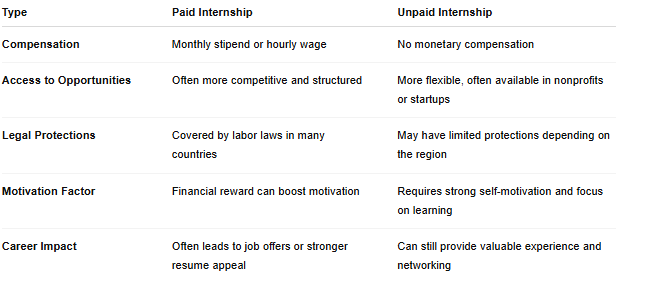
Paid vs. Unpaid Internship
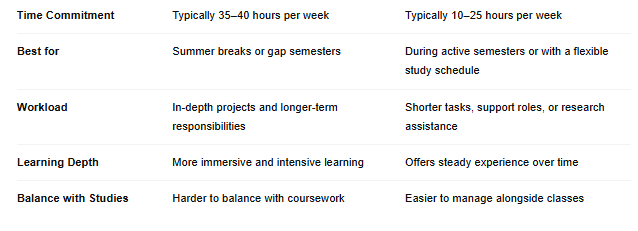
Full-Time Internship vs. Part-Time Internship
Can You Get a Paid Internship During a College Degree?
Yes, you can receive an offer of a paid internship even during your degree. Many high-tier or even low-tier organizations across various industries actively hire undergraduate students for paid internship programs to attract early talent and train future full-time employees. But it depends on your internship hunting strategy and preparation.
Benefits of an Internship During a Degree
Finding and completing an internship while pursuing your degree is an early investment in your career. Here are the key benefits:
- Real-World Experience
Classroom learning and knowledge are important, but internship programs allow you to learned skills in professional business settings. An undergraduate internship will be your plus when you complete your school, or maybe you are a full-time professional before graduation.
- Skills Development
Internships allow you to develop and improve technical, non-technical, soft, and hard skills that employers look for.
- Maximum Job or Hiring Chances
According to hiring studies, students with internships are more likely to receive job offers compared to candidates without an internship in the targeted field.
- Test Drive Job
An internship during your degree gives you a taste of your selected professional career. It allows you to think and decide whether to stick with the chosen field or explore other career paths for success.
Pro Tip: One of the biggest advantages of doing an internship during your degree is that you start building your resume early, giving you a strong head start when applying for full-time jobs after graduation.
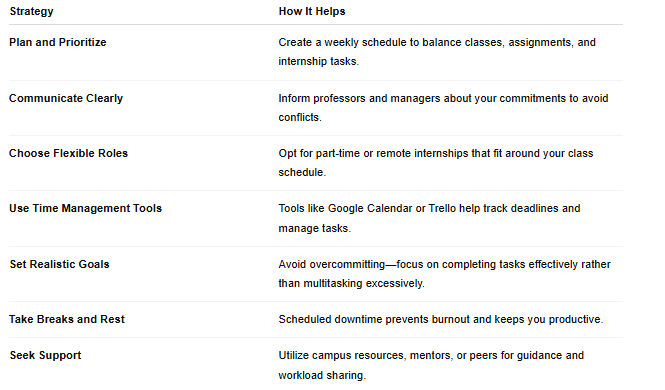
How to Manage Educational Burden and Internship Workload?
Balancing college coursework with an internship can be difficult, but with proper time management, you can excel in both fields.
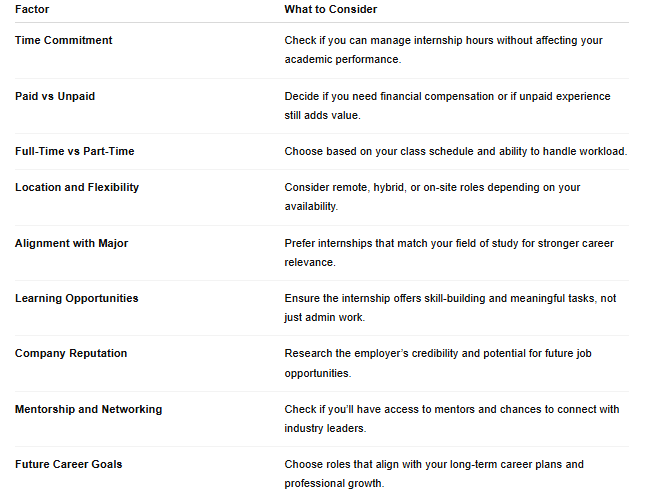
Things to Consider for an Internship During a Degree
Before finding and enrolling in an internship with your formal degree, focus on these factors to make the most out of your experience:
Conclusion
An intership during a degree is no longer just an option. It has become a necessity or standard to secure a job in today’s competitive, AI-driven job market. By starting early search, networking strategically and professionally, and completing internships per your career goals increase your chances of finding a full-time job even before graduation.