
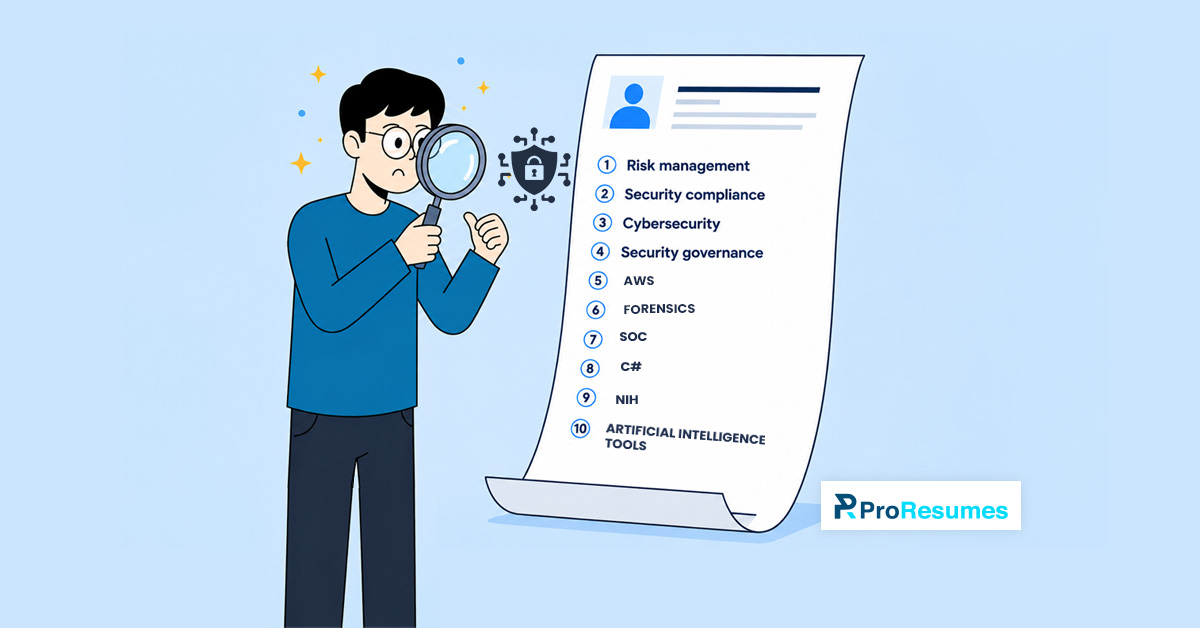
Use ATS-friendly cybersecurity keywords for your resume
Do you know that more than 97% of Fortune 500 companies use an Applicant Tracking System (ATS)?
As employment opportunities for cybersecurity professionals are rapidly increasing, so does the competition among job applicants.
Basic cybersecurity resumes have no chance against ATS scanning that rejects applications without proper formatting and keyword optimization.
If you’re a part of the cybersecurity industry and interested in optimizing your resume, use this blog as a guide. We will help you understand the importance of ATS-optimized resume keywords.
Moreover, we will also provide you with 175 cybersecurity keywords divided according to job positions and purpose. Don’t forget to check out the common resume keyword mistakes that you must avoid at all costs.
What are ATS-optimized keywords for resumes?
The applicant tracking system, or ATS, is software used by organizations and recruiters for resume parsing and scanning. It is essential to understand the significance of resume keywords and how they can help your resume reach the recruiter.
Resume keywords are the technical terms and industry-specific phrases related to processes, tools, skills, and technologies. These keywords are used to highlight your qualifications and expertise for a job opportunity.
The ATS software is like a matchmaker that parses your resume for the keywords according to the recruiter’s criteria. Your resume clears the scan if it matches perfectly.
It is important to understand the significance of using ATS-friendly cybersecurity keywords for your resume because:
- They highlight your expertise and knowledge of various security frameworks, tools, and technologies.
- They enhance your worth as a candidate who is detail-oriented and well-informed about the latest industry trends and practices.
- They align your resume with the requirements of a recruiter, increasing your chances of getting interviewed.
How to add cybersecurity keywords to a resume to pass ATS scanning?
Tailoring your resume according to a specific job is essential for your selection.
Here’s how you can add the best ATS keywords in your cybersecurity resume:
Conduct a Job description analysis
Go to a job search site and search for cybersecurity job vacancies. Pick a desired job posting and analyze its description in detail for the keywords that match your expertise. For example, you might spot skills like Information Security, Risk management, CISM, and more.
Divide keywords into resume sections
Once you’ve filtered all the possible keywords, divide them into different sections like experience, skills, tech stack, and more. This will help you tailor your resume easily by integrating the appropriate keywords in every resume section.
Keep the job title the same as the description
It is ideal to add the job title or designation mentioned in the job posting to your resume. Most recruiters have added job titles to their ATS scanning criteria. The lack of specific designation-related keywords can lower your score.
Add cybersecurity keywords naturally
Write your resume content strategically with the natural integration of keywords to maximize readability and significance.
Keyword optimization isn’t a piece of cake, if you’re writing a tech resume for the first time!
Certified writers at ProResumes naturally embed cybersecurity keywords in your resume that guarantee high ATS scoring.
Resume keyword classification for ATS
Use the following keyword classification to divide keywords extracted from a job description:
Job Designation related keywords
These keywords are used to highlight the name of the role one is going to apply for in an organization. It might include keywords like Pen Tester, SOC analysts, Forensic analysts, and more.
Tools-related keywords
These keywords instantly tell the resume parser or human reader about your understanding of industry tools. Such cybersecurity keywords include Wireshark, Splunk, and more.
Skills related keywords
These keywords are used to highlight your technical skills along with people skills. For example, Vulnerability management, risk assessment, collaboration, and more.
Educational keywords
These words highlight your educational experience or certifications, such as CompTIA Security+, bachelor’s, and more
Action-related keywords
These keywords are used to describe what you’re capable of doing, such as mentored, coordinated, led, and more.
Cybersecurity keywords required for a resume according to different job descriptions
We’ve analyzed a range of cybersecurity jobs from internship to managerial level and filtered the keywords used in their descriptions.
Moreover, the keywords blended into certifications, results, and action-oriented keywords as they transitioned to experienced cybersecurity roles.
Cybersecurity keywords for Intern or Entry-Level Position
The following keywords are extracted for an intern-level cybersecurity position’s job description posted on LinkedIn:
- Security Software Engineering
- Red Team
- Automation
- Encryption
- Security Analysts
- Compliance
- Forensics
- Threat Intelligence
- Incident Handling
- Cybersecurity tools
- Security Documentation
- Communication skills
- Object-oriented programming (OOP)
- Programming languages
- C#
- Java
- Python
- Risk analysis
- Cloud Security
- AWS
- Azure
- Google Cloud Platform
- Artificial Intelligence tools
Cybersecurity keywords for a Senior or Specialist Position
The following keywords are extracted from a job description of a senior-level cybersecurity position on Indeed:
- Risk management
- Security compliance
- Cybersecurity
- Security governance
- NIST
- NIH
- Security frameworks
- FISMA
- Governance, Risk and Compliance
- SOC
- Risk Assessment
- Security Audit
- Collaboration
- Designing
- Process improvement
- Authorization to Operate (ATO)
- System documentation
- Vulnerability Tracking
- Information Technology
- Mentorship
- Communication
- Compliance reports
Cybersecurity keywords for a Junior Analyst Position
The listed cybersecurity keywords are filtered from a junior-level cybersecurity position posted on LinkedIn:
- Information Security
- Financial systems
- Security regulation
- SIEM
- EDR
- Endpoint protection
- Security incidents
- Vulnerability scanning
- Remediation tracking
- Identity management
- Phishing detection
- Audits and compliance
- NCUA
- SOC
- Information technology
- IT security
- Network Security
- Ransomware
- Malware
- Operating Systems (Linux, Windows)
- CompTIA Security+
- Cybersecurity certifications
- Governance, Risk, and Compliance
- Vulnerability Management
- Rapid7
- Microsoft Defender
Cybersecurity keywords for a Managerial or Lead Position
We analyzed an experienced or managerial-level cybersecurity job description from Indeed to extract the following keywords:
- Collaborate
- Lead
- Security Audit
- Splunk
- Incident Response
- Vulnerability assessment
- Risk assessment
- Security implementation
- Network security
- Product Evaluation
- Customer Systems
- NIST
- FISMA
- Cloud security
- CISSP
- CISA
- CISM
- Information Technology
- PMP
- DOJ
What are the common cybersecurity keywords that can be used in resumes?
We classified and divided the best ATS-friendly cybersecurity keywords to use in your resumes for 2026.
Cybersecurity tools-related keywords
Here’s a list of tools used by cybersecurity professionals to add in your resumes:
- Splunk
- Snort
- Kali Linux
- Metasploit
- John the Ripper
- Nikito
- Nmap
- Wireshark
- OSSEC
- Bit9
- Nessus
- Burp suite
- Nexpose
- Aircrak-ng
- KeyPass
Scripting and Programming related keywords
These are the keywords mostly used to discuss programming or scripting within cybersecurity:
- Python
- Bash
- C++
- C#
- Java
- Django
- SQL
- Shell Scripting
- PHP
- PowerShell
- Ruby
- Perl
Operating Systems related keywords
These ATS-optimized resume keywords will help the software clear your resume for having essential operating systems knowledge:
- Linux
- Windows
- Unix
- MacOS
Security frameworks and standards related keywords
Integrating these resume keywords within your cybersecurity resume will help you in exhibiting your understanding of security compliance:
- ISO27001
- NIST
- COBIT
- CIS controls
- GDPR
- OWASP
- PCI DSS
- FISMA
- CMMC
- SOC 2
Cybersecurity certifications related keywords
Incorporating these keywords for certifications will help the Applicant Tracking System in accessing your potential for the desired job position:
- CISSP
- CompTIA Security+
- CISM
- CEH
- CISA
- GCIH
- SSEP
- GSEC
Cybersecurity technologies and technical keywords
Here’s a list of 35 top cybersecurity keywords to use in your resume and beat the ATS scans easily:
- Cloud Security
- Blockchain Security
- Zero-trust Systems
- Cloud Security
- Intrusion Detection
- SIEM
- Endpoint Security
- IDS/IPS
- Risk Assessment
- Penetration Testing
- Firewalls
- Information Security
- Ethical Hacking
- Incident Response
- Malware Analysis
- Threat Detection
- Cyber Threat Intelligence
- Data Loss Prevention
- Google Cloud
- AWS
- Microsoft Azure
- Vulnerability management
- Security Compliance
- Identity and Access Management (IAM)
- Encryption
- Scripting
- Network Security
- Information Security Management
- Threat Detection and Protection (TDR)
- VPN
- Security Auditing
- TCP/IP protocols
- Incident Handling
- Cryptography
- LAN/WAN
What are the mistakes one should avoid while adding keywords to a resume?
It is essential to implement proper keyword optimization in your cybersecurity resume to avoid getting rejected by an ATS software.
Avoid the following mistakes while adding keywords in your job application:
Usage of Irrelevant keywords
While we stress the importance of adding keywords to your resume, it is essential to avoid irrelevant keywords. Adding Teck stack or technical skills that are unrelated to the targeted job affects your ATS score.
Avoiding keyword variations
It is essential to use variations of a single keyword while tailoring your resume to ensure a high ATS score. Most of the time, recruiters add specific industry- or role-related keywords for the ATS scanning criteria. However, the lack of keyword variation can lead to low ranking or rejection.
Unnecessary keyword stuffing
Adding the same keywords frequently throughout your resume might result in keyword stuffing. Moreover, even if your resume passes the ATS scan, a human reader might reject it because of unreadable context.
Wrong keyword placement
Randomly listing your keywords without any supporting or meaningful content related to results or experience is a major resume blunder. Keyword placement is crucial to make your resume scannable and readable for ATS and human recruiters.
Avoiding professional updates
It is crucial to tailor your resume with the latest terminology and key professional terms before submitting it. The ATS software rejects resumes with outdated keywords or industry-specific terms.
Key Takeaways
- ATS-optimized keywords help match your resume with the job responsibilities and candidate requirements criteria.
- It is ideal to analyze the job descriptions in detail to gather all industry-specific keywords for tailoring your resume.
- Dividing the keywords into different sections like skills, certifications, tools and more makes it easy to write cohesive resume content.
- Use keyword variations and avoid keyword stuffing to ensure that your resume is ATS-friendly.
Frequently Asked Questions
Q. Is a 70% ATS score good?
Yes, a 70% Applicant Tracking System (ATS) score falls under the category of moderately good scores. An ATS score above 80% on a resume is considered one of the strongest job candidate criteria.
Q. How to score high on ATS?
It is not easy to score high on an Applicant tracking system without professional resume guidance. However, one can take care of the following things to make sure that their resume is optimized for ATS:
- Focus on proper and clean resume formatting.
- Add keywords related to the industry or job.
- Optimize resumes with language used in job descriptions.