

Is Studying at Yale University Beneficial for Your Career?
Yale University was established in 1701 and is considered one of the top universities in America. It provides a rich student experience and global career opportunities due to its Ivy League status. The Yale global rankings include the 16th spot by QS for the world university ranking.
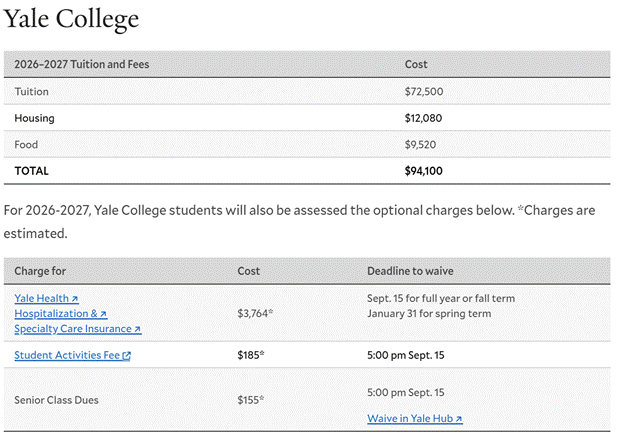
The university is popular for academic programs in majors like economics, computer science, history, and more. Moreover, one year of undergraduate tuition at Yale is around $72,500. However, the university offers full financial assistance on a need-based basis for families having income below $100,000.
Are you thinking about whether Yale University is worth it? Don’t worry, as it offers a great company since five US presidents graduated from Yale. These include George H. W. Bush, Bill Clinton, Gerald Ford, William Howard Taft, and George W. Bush.
Explore the reasons why Yale can be the best choice for your educational journey!
Why should you study at Yale University?
Here’s a list of benefits of studying at Yale for students in the US and other countries:
- It is one of the most prestigious US universities with Ivy League status that offers global opportunities for students.
- The research opportunities at Yale help students get an edge and dominate others in various fields.
- The residential colleges at Yale focus on developing strong community bonds.
- It offers a dynamic campus life outside academics for students to enjoy through clubs, events, exhibitions, and more.
- It offers a multicultural environment as it brings people together from various nationalities, ethnicities, or religions.
What are the majors that you can study at Yale University?
The following is a list of Yale University majors and academic programs within different fields:
Biological sciences
Here’s a list of all the majors within the biological sciences department at Yale:
- Biological & Biomedical Sciences
- Cell Biology
- Cellular & Molecular Physiology
- Computational Biology & Biomedical Informatics
- Ecology & Evolutionary Biology
- Environment
- Forestry
- Microbiology
- Molecular Biophysics & Biochemistry
- Molecular, Cellular & Developmental Biology
- Neuroscience
- Neuroscience, Interdepartmental Program
Engineering
The engineering majors at Yale include the following:
- Biomedical Engineering
- Chemical & Environmental Engineering
- Computer Science
- Electrical & Computer Engineering
- Engineering & Applied Science
- Mechanical Engineering & Materials Science
Health & Medicine
Here’s a list of Yale University’s medical programs for students:
- Anesthesiology
- Biological & Biomedical Sciences
- Biomedical Engineering
- Biostatistics
- Cellular & Molecular Physiology
- Child Study Center
- Chronic Disease Epidemiology
- Cognitive Science
- Comparative Medicine
- Dermatology
- Emergency Medicine
- Environmental Health Sciences
- Epidemiology of Microbial Diseases
- Experimental Pathology
- Genetics
- Health Care Management
- Health Policy & Management
- History of Medicine
- Immunobiology
- Internal Medicine
- Investigative Medicine
- Laboratory Medicine
- Microbial Pathogenesis
- Molecular Biophysics & Biochemistry
- Neurology
- Neuroscience
- Neuroscience, Interdepartmental Program
- Neurosurgery
- Nursing
- Obstetrics, Gynecology & Reproductive Sciences
- Ophthalmology & Visual Science
- Orthopedics & Rehabilitation
- Pathology
- Pediatrics
- Pharmacology
- Psychiatry
- Public Health
- Radiology & Biomedical Imaging
- Surgery
- Therapeutic Radiology/Radiation Oncology
- Urology
Humanities
The Yale University’s humanities programs include the following:
- African studies
- American Studies
- Architecture
- Black Studies
- Classics
- Comparative Literature
- Early Modern Studies
- East Asian Languages & Literatures
- English Language & Literature
- Ethnicity, Race, & Migration
- Film & Media Studies
- French
- German
- History
- History of Art
- History of Medicine
- History of Science & Medicine
- Humanities
- Italian Studies
- Jewish Studies
- Medieval Studies
- Music
- Near Eastern Languages & Civilizations
- Philosophy
- Religious Studies
- Slavic Languages & Literatures
- Spanish & Portuguese
- Theater, Dance, & Performance Studies
- Women’s, Gender, & Sexuality Studies
Physical Sciences
The following programs are offered by the physical sciences department at Yale:
- Applied Mathematics
- Applied Physics
- Astronomy
- Chemistry
- Earth & Planetary Sciences
- Mathematics
- Physics
Social Sciences
Yale University’s social sciences majors include the following:
- Anthropology
- Archaeological Studies
- Biostatistics
- Cognitive Science
- Economics
- Global Affairs
- International & Development Economics
- Latin American Studies
- Law
- Linguistics
- Management
- Modern Middle East Studies
- Political Science
- Psychology
- Sociology
- South Asian Studies
- Statistics & Data Science
Can’t find a major according to your interests at Yale? Check out the majors in other top US universities or get the help of certified career experts.
What are the best majors and degree programs at Yale University?
The best degree programs for undergraduates and graduates at Yale are from the following five majors:
Economics
It is one of the most popular majors at Yale. It helps students build quantitative and analytical skills. It allows students to have career prospects in industries like academia, finance, consulting, and more.
Computer Science
This department offers degree programs like Bachelor of Science (BS) and Bachelor of Arts (BA). Moreover, it also offers students the opportunity to pursue joint majors in engineering, psychology, or math. This major prepares students to have prosperous careers in the information technology field.
Political Science
This major covers areas like comparative politics, international affairs, and political theory. It helps students build research skills and critical thinking to have careers in journalism, law, or academia.
History
It is one of the most popular majors at Yale and covers the history of many regions and periods. It offers in-depth degree programs that build students’ writing skills and research abilities. Moreover, applicants with this major can build a career in law, journalism, media, and more.
Global Affairs
It allows students to take a multidisciplinary approach to solve international issues related to economy, history, or politics. Students are also allowed to build their own curriculum according to their interests.
Note: Each academic program requirement depends on the degree or major chosen by the applicant.
How to get into Yale University in the 2026-2027 academic year?
Yale University’s admission requirements for various applicants include the following:
First-year applicants
The Yale University application process for first-year applicants includes the following:
- Complete and submit your application online through the following:
- Common Application
- Coalition Application on SCOIR
- QuestBridge Application
- Include letters of recommendation from a school counselor and two teachers.
- Include an official school report with a transcript.
- Include the standardized test results for ACT and SAT. According to QS, the SAT requirements for Yale are 1450+. The ACT requirements include scores from the English, Mathematics and Reading sections.
- Activate the Yale Admission Status portal after receiving an email from the university.
Transfer applicants
Transfer applicants are required to complete their coursework at an accredited post-secondary institution. The Yale College for Undergraduates requires applicants to complete 36 course credits.
The eligibility criteria for transfer students at Yale include having an equivalent of 18 course credits at Yale. They are required to complete the remaining 18 course credits at Yale University.
The admission process for transfer applicants at Yale includes:
- The applicants should submit an online application through the Transfer Common Application.
- Submit two recommendation letters from the instructors of the courses with earned credits.
- Submit the official transcript of your school and college.
- Ask your college dean to complete and submit the Common Application College Report.
- Submit the Common Application Mid-term report, if you’re still enrolled in the college.
- Include the standardized test scores for SAT and ACT.
International applicants
The admission requirements for international students at Yale are the same as US students. However, their application process includes the following additional things:
- English language proficiency test scores from any of the tests listed below:
- TOEFL
- IELTS
- DET
- Cambridge English Qualifications
- InitialView
- Application materials should be in English. Documents or transcripts in foreign languages are not acceptable. Students must include a certified English translation of each document.
Graduate applicants
The Yale University graduate school admission process depends on the graduate or professional school. The institute includes a Graduate School of Arts and Sciences that offers master’s and Ph.D. degree programs within 73 departments.
Moreover, it also offers 13 professional schools for graduate students, including:
- School of Architecture
- School of Art
- Divinity School
- David Geffen School of Drama
- School of Engineering & Applied Science
- School of the Environment
- Jackson School of Global Affairs
- Law School
- School of Management
- School of Medicine
- School of Music
- School of Nursing
- School of Public Health
The acceptance requirements for graduate degrees in the Graduate School of Arts and Sciences is:
- A bachelor’s degree for graduate programs and a master’s degree for Ph.D. academic programs.
- Statement of academic purpose.
- List of all the universities, colleges, and schools attended along with unofficial transcripts.
- Three letters of recommendation from teachers. The applicants can request recommendations through their online application.
- Standardized test scores including GRE: 317+, GMAT: 690+. Moreover, English language proficiency test scores for non-native English speakers. Criteria include 7+ for IELTS, 90+ for Duolingo English Test, and 102+ for TOEFL.
- $105 application fee or fee waiver request.
- A CV or resume document.
- Optional writing samples depend on the selected academic programs.
Get the help of certified resume writers and create an ATS-optimized student resume that can impress the reader.
What is the Yale University cost of attendance and tuition fees for the academic year 2026-2027?
The total estimated cost of attendance to study for a year at Yale for undergraduate students is around $97,985. This entire cost is exclusive of financial assistance and can vary according to the institute’s decisions.
According to this estimated cost, four years at Yale for undergraduates might cost around $391,940. Moreover, while planning for four years, students should keep in mind that financial assistance will also increase with COA.
Moreover, the university will verify the financial condition of the student’s family every year.
It is important to understand that billed expenses, including tuition, housing, and food, are fixed. However, the non-billed and additional expenses might vary.
Explore the separate charges included in the estimated cost of attendance and Yale University’s tuition fees for 2026-2027.
Cost of attendance
The living expenses, housing fees, educational costs, and more for undergraduates are included in their cost of attendance:
| Expenses | Cost |
| Tuition fees | $72,500 |
| Housing | $12,080 |
| Student activity fee | $185 |
| Food | $9520 |
| Books/Course Material/Supplies/Equipment | $1,000 |
| Personal expenses | $2,700 |
| Total | $97,985 |
Note: The estimated cost of attendance (COA) for Yale graduate students depends on the schools and majors. Students can check the official website of the Yale graduate and professional school that they are interested in.
Tuition fees
Yale University’s undergraduate tuition for 2026-2027 is around:
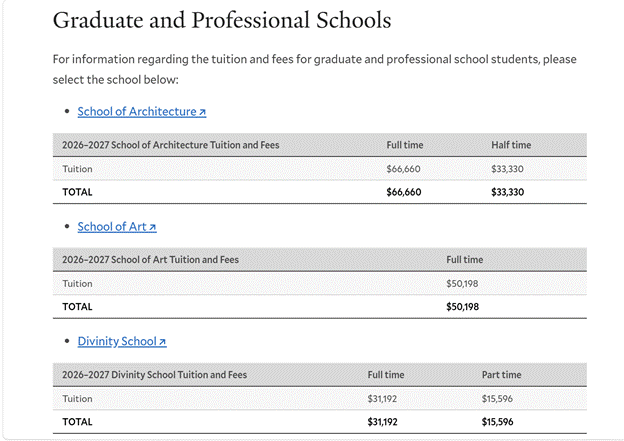
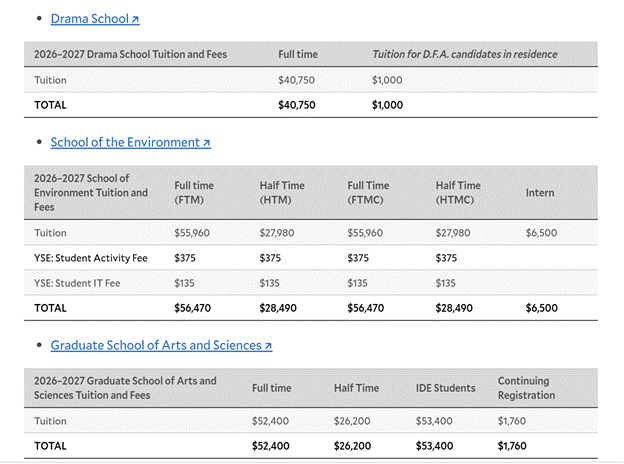
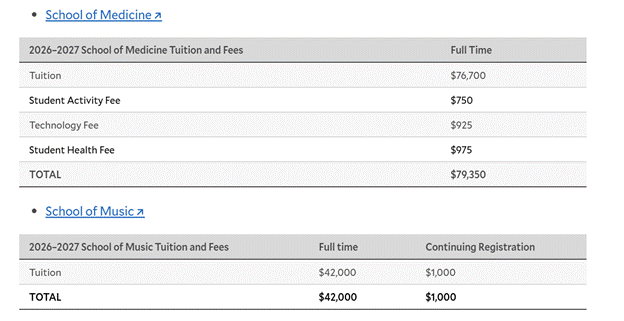
Yale University’s graduate tuition fees vary according to the different graduate schools:
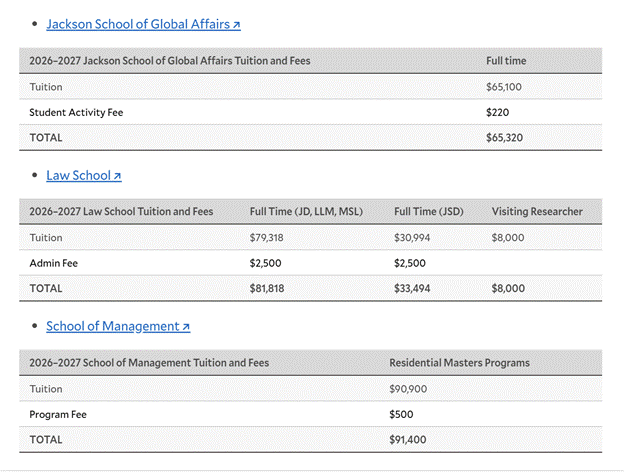
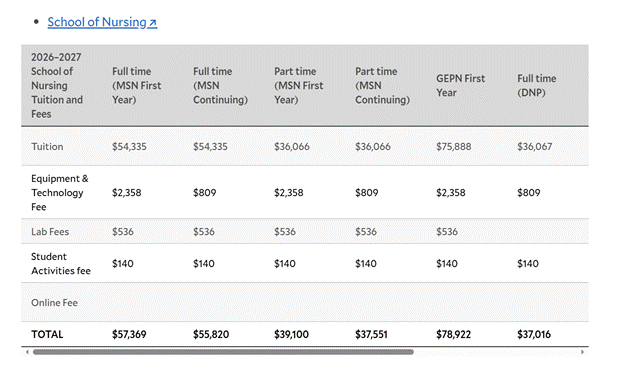
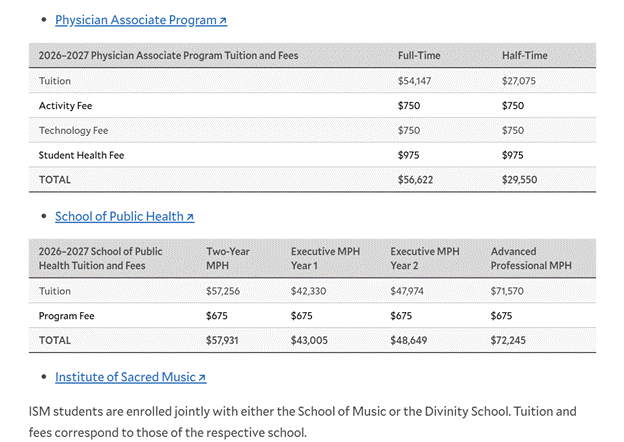
Note: Yale University costs international students the same as it does for US citizens. Moreover, they also offer need-based scholarships for international students, which may have US tax implications.
What are the application deadlines for admission at Yale?
The following is the list of Yale University application deadlines for different applicants:
First-year applicants
The application deadline for first-year applicants is divided into three categories:
Early Action
- November 1, 2026, is the application deadline.
- The decision will be released around mid-December.
- The reply deadline for admitted students is May 1, 2027.
Regular Decision
- January 2, 2027, is the application deadline date.
- The decision will be released around late March 2027.
- May 1, 2027, is the admitted students’ reply deadline.
Quest Bridge Match
- November 1, 2026, is the application deadline.
- The matches will be notified by early December 2026.
Transfer applicants
The transfer student timeline for admission in academic year 2026-2027 is:
- Candidates can submit transfer applications by late November in 2026.
- March 1, 2027, is the application deadline for transfer admissions.
- April 1 is the deadline to submit standardized test results and transfer documents.
- April 20 is the deadline to submit the Mid-term report.
- The decisions will be released by early May 2027.
- Admitted students should reply by late May.
Graduate applicants
The application deadline for graduate applicants at Yale depends on the major or degree program selected by the applicants.
- The main application submission dates vary between December 2026 and January 2027.
- The applications will be reviewed between December 2026 and March 2027.
- The decisions will be released between February to March 2027.
- April 15, 2027, is the deadline for admitted students to give a reply.
What type of financial aid is awarded to students at Yale University?
Yale University’s funding opportunities for undergraduates include the following:
Scholarships and Grants
Yale University grants and scholarships are considered gift aid and are not required to be repaid by the students. These gift aids include the following:
- Merit-based scholarships: It’s not directly offered by Yale but through private organizations, employers, and more. The requirement for the scholarship depends on progress in academics, extracurricular activities, and more. It also covers the student’s share section from Yale’s financial aid offer.
- Yale scholarship: This is provided directly from the university funds depending on the student and their family’s financial situation.
- Entitlement grants: These grants are often provided by the state or federal government depending on financial needs. It includes Pell Grants, state grants, and more.
Term-time Jobs
It includes opportunities like Federal work-study and other job opportunities. Students can look for paid work in different departments of the institute. Moreover, these opportunities offer flexible work hours and employers who give importance to students’ academic performance.
The undergraduates who receive financial aid can get employment opportunities on campus during the first week of the term. Moreover, the earnings are paid directly to the students.
Education Loans
Yale University’s student financial support policy ensures that students aren’t required to take any loans. However, some students prefer education loans to decrease some costs. They can take loans to cover the student’s share in the Yale financial assistance program.
What are the Yale University scholarships eligibility criteria for students?
The Yale University tuition assistance or full scholarship requirements for different students are mentioned below.
Financial aid for local applicants
The US citizens are required to fulfill the following criteria to get eligible for financial aid:
- Submit the CSS Profile with code 3987.
- Submit the FAFSA form with code 001426.
- Submit parents’ and students’ tax return forms.
- Submit parents’ and students’ W-2(s).
- Submit non-custodial parent request form/requirements.
- Submit business tax returns.
- Submit Form 1040 Schedules 1, 2, 3.
- Submit Form 1040 Schedules A, B, C, D, E, F.
- Submit all documents through the IDOC platform.
Financial aid for international applicants
Yale University’s scholarship requirements to be eligible for need-based aid include mentioning it in the online application. The university’s Undergraduate Financial Aid department will contact the applicant and guide them on the procedure.
However, Yale doesn’t accept the International Student Financial Aid Application (ISFAA) from international students. Moreover, financial aid is provided by comparing the US economy with the applicant’s home country economy.
Note: Yale University scholarship for international students will have tax implications according to the Internal Revenue Service (IRS) in the USA.
Financial aid for graduate applicants
The master’s degree students at Yale don’t receive any funding opportunities from the university. However, some graduate schools offer fellowship programs for students.
These students can cover their financial needs by taking student loans, searching for Yale grants, health awards, or student employment.
Frequently Asked Questions
Q. Is Yale harder than Harvard University?
Yale and Harvard are both considered Ivy League universities that offer various career opportunities and academic excellence. The Yale University acceptance rate is around 4.2% for the class of 2030.
Meanwhile, the rate of acceptance at Harvard University is around 4.18% for the class of 2029. This is a slight difference, which suggests that getting into Yale can be as hard as Harvard.
Q. Can a 3.5 GPA get you into Yale?
According to an Ivy League counselor, Yale never gave a fixed minimum GPA requirement or shared the GPA of admitted students. However, students should aim for an unweighted 3.9 GPA or more to get admission to Yale.
Moreover, if you’ve a GPA below 3.8, then the applicant should focus on their Extracurriculars and personal statement. They need to have a strong profile of research work, academic rigor, and recommendations.
Q. Can you go to Yale for free if your family makes under $200,000?
According to the institute, students whose annual family income is below
$100,000 will receive free education. Yale announced on January 27, 2026, that the entire cost of attendance will be covered for such families.
Meanwhile, they also announced that from the academic year 2026-2027, families with income below $200,000 will get need-based aid. According to the Dean of Undergraduate Admissions, this is a big investment to make Yale affordable for students.
The scholarships for families with income below $200,000 will cover the tuition expenses of 80% of American students.