
ICU nurse salary in the US
Want to build your career in nursing?
Explore the average ICU nurse’s salary in the US, according to the annual, monthly, weekly, and hourly pay rates.
How much does an ICU nurse earn on an annual basis?
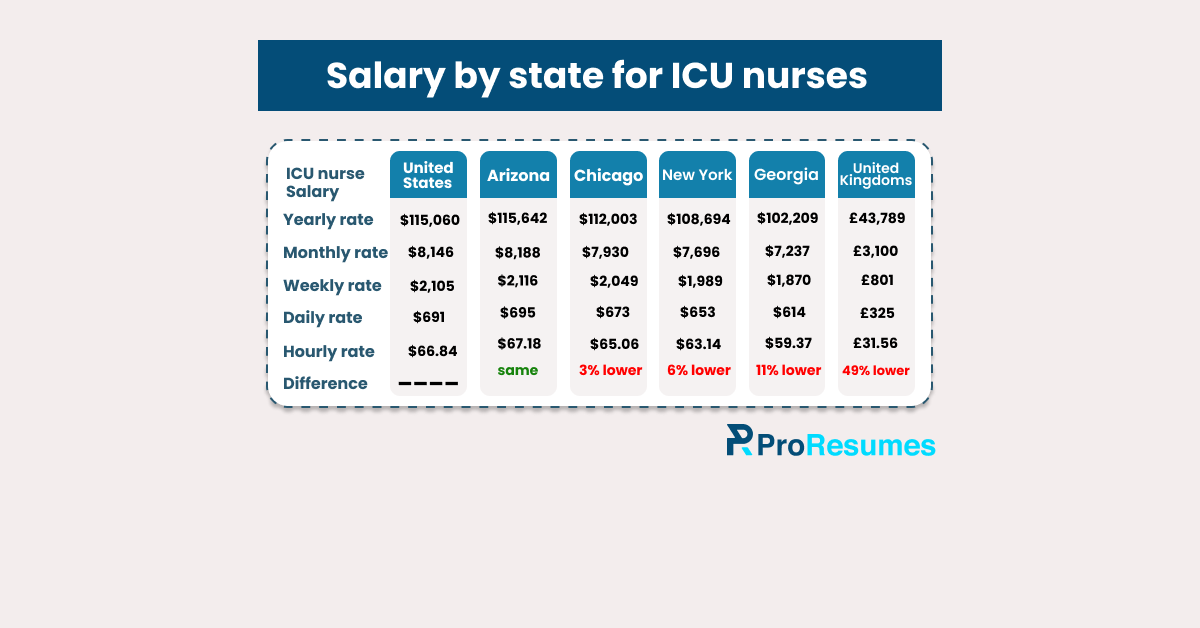
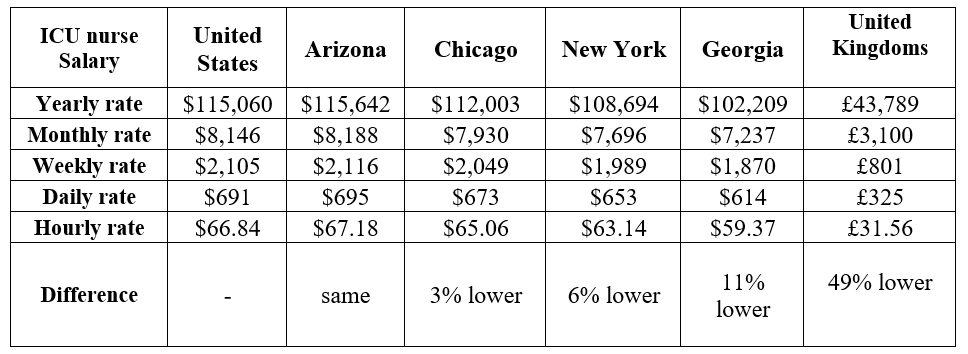
The average ICU nurse salary in the US is estimated to be around $115,060 in a year. Entry-level ICU nurse salary is around $89,657 on an annual basis. Meanwhile senior nurses working in the ICU can earn up to $147,660 annually.
The monthly ICU nurse salary is around $8,146 with a $66.84 standard hourly pay rate.
The average ICU nurse in the United States can make up to $691 in a day and $2,105 per week.
The average ICU nurse salary in Arizona is $8,188 per month which is similar to the US average.
Who is an ICU nurse?
An ICU nurse is a medical professional who is part of the intensive care unit as a trained staff. They are also known as critical care nurses since they look after patients with sensitive conditions or serious injuries.
How many years of schooling are needed to become a nurse in the ICU?
To become an ICU nurse in the US, one must have to:
- Achieve a bachelor’s degree in nursing to become an RN or registered nurse.
- Complete nursing training in different areas like special care, acute patient care and more.
- Clear the American board exam for certification.
What is the salary by state for ICU nurses?
The standard ICU nurse salary in Georgia is $59.37, which is 11% lower than the average US salary range.
The ICU nurses in New York make up to $1,989 per week. However, this salary rate is still 6 percent less than the average weekly rate in the US.
The ICU nurses make around $673 per day in Chicago which is slightly lower than daily wages in the US. The average ICU nurse salary in the UK is around £43,789 in a year. However, ICU nurses in the UK earn 49% less than the critical care nurse in the United States.
Frequently Asked Questions
Q. What is another name for an ICU nurse?
ICU nurses are also known as CCN or critical care nurses. These nurses are responsible for dealing with patients with serious or traumatic injuries.