
How to write a good professional summary on your resume?
A good resume summary reflects who you are, why you are best for this position, and what value you added for the previous employers aling with the requirements of the targeted role. A professional summary is an important part of the resume, and it is the first part which recuriter is going to read. So, a resume summary is a matter of selection or rejection at first sight.
You can use a good professional summary to answer the common interview question, “Tell me about yourself?” Yes, having a good professional summary on your resume can increase your chances of getting hired.
Want to get your dream job 4x faster? In this guide, we will tell you everything about a good professional summary and how you can write one.
What is a resume summary?
You can conclude what a resume summary is from the name itself. It is a precise and crisp single paragraph, including 2 to 4 lines, to highlight a job seeker’s worth. A professional summary is situated at the top of your resume, just below your name and contact information. Career strategists and resume writers at ProResumes think that a professional summary can be a blessing or a curse.
Why is it a blessing and a curse as well?
Resume summaries are situated at the top of your resume and can increase or decrease your chances. According to a certified resume writer, Alex, “Your summary can make or break your chances of landing an interview.”
A good professional summary can attract a recruiter and pass the Applicant Tracking System screening. According to statistics, 94% of recruiters use ATS to carry out the hiring process. To make sure your resume summary passes the ATS scan, you should optimize it for relevant keywords and tailor it.
Don’t know how to write a professional summary that gets you the job? Message ProResumes and get a polished resume summary written by certified resume writers.
Where good resume summaries make your chances, bad or mid resume summaries kill them. Generalized, overstuffed, or too-long summaries leave a bad impression on the hiring manager. If you can’t write a good resume summary yourself, get ideas from resume builders or resume templates.
Unaware of resume summary standards such as summary length, keywords coverage, summary customization, and proper reflection of your background. You can get help from certified resume writers or career coaches at ProResumes
Use a professional summary when
Since we know that badly written resume summaries can backfire, job seekers should use summaries when:
- You want to score high in the Applicant Tracking System (ATS) screening.
- You want to compel the hiring expert to read the full resume.
- You want to capture attention by highlighting key skills and years of experience.
Tips on how to write a good professional summary
Ready to write a great summary for your resume?
There are some tips to keep in mind while writing one, such as:
- Use a master resume and pick out the key skills that you want to pitch.
- Research the target company, read the job description to find details like company language, keywords, and expectations.
- Write a draft and make sure you highlight the skills, your key achievements, and years of experience.
- Use numbers instead of words to quantify the results you achieved in the past.
- Don’t write too much in a resume summary. Be specific but as concise as possible. Ideally, write a single paragraph with a maximum of 4 lines.
- Proofread your professional summary yourself and test the readability by asking a friend to proofread it.
Avoid these things while writing a good professional summary
We’ve learned how to write a great summary for a resume, but there are things one should avoid while writing them:
Avoid Vague or Generalized Language
Hiring managers go through hundreds of resumes a day and hardly give them 7 to 8 seconds for a glance. Your resume summary is situated at the top of your resume. This is a blessing and a curse at the same time. If a recruiter spots a very generalized personality keyword while glancing, you might lose the chance.
Don’t add generalized adjectives and buzzwords in your resume, like ‘team player’ or ‘hard worker’.
Avoid the first-person voice
Job seekers don’t realize this while writing a professional summary that using the first-person voice is an instant killer. Your resume is a formal document, not your personal diary, and a hiring manager is certainly not your friend.
Avoid extensive resume summaries
A good professional summary is meant to be written in a concise format. You don’t have to write extensive resume summaries; just add key details like an advertisement.
Avoid listing duties
Your resume summary is used to tell your employer your worth as precisely as possible. Rather than listing what you did in your previous experience, tell what you achieved. A good professional summary is used to highlight or quantify your wins to attract hiring managers.
How to write a good professional summary with no experience?
Job seekers who lack significant years of experience are recommended by career coaches to add resume objectives. Resume objectives are statements that highlight the aim and skills of a job seeker with no work experience.
However, if you want to change careers or have little experience, you can write a professional summary by:
- Highlighting two or three key skills that are transferable.
- Highlighting your coursework or projects if they are relevant to the job.
- Highlighting any relevant extra-curricular activity to show skill set.
Meanwhile, a resume summary can be a good option to attract a recruiter; it is not necessary if you lack experience. According to a recruiter on Reddit, it is better to leave the summary as a fresher than to write fluff statements.
Some examples of good professional summaries
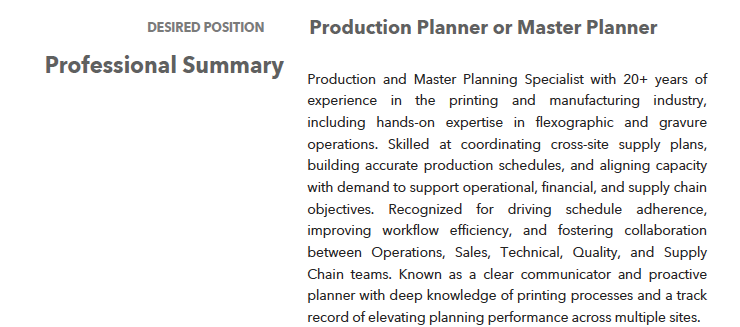
Since we learned how to write a good professional summary, here are some resume summary examples to help you:
Example 1:
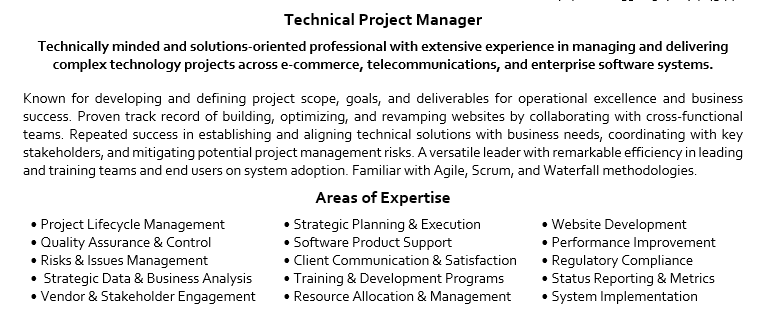
Example 2:

Example 3:
How to make your professional summary stand out?
Writing a stellar resume summary to get a job is not that hard!
Just follow these key takeaways:
- Treat a summary as a summary. Don’t stuff it with fluff or buzzwords.
- Don’t be vague. Specify your key skills and work experience without being wordy.
- Use numbers and metrics to highlight your past achievements.
- Never use the first-person voice while writing a resume summary.
- Always highlight the outcomes of your work, not the tasks.
We look forward to reading great resume summaries from your side!
Frequently Asked Questions
Q. What should I write in the summary of my resume?
A resume summary is used to capture the attention of the hiring manager and compel them enough to read the entire resume. If you want to write a good professional summary for your resume, then you should highlight your core capabilities.
Add relevant skills and experience, along with a bit of personality touch.
Q. How do I tailor my summary to a specific job?
To tailor your resume summary to a specific job, you should analyze the job post for details. Highlight the main things while analyzing the summary, such as keywords and language. These details will help you in writing a good professional summary for your resume.
Q. What are resume objectives?
Resume objectives are generalized and concise statements highlighting the aims of the job seekers. Job seekers with a lack of experience, like students, freshers, or career changers, can use resume objectives instead of summaries.
Q. How long should your resume summary be?
A good professional summary should be written in a clear and short format within 2 to 3 lines. It can be written in the form of a single paragraph.