

10 Cybersecurity Skills in a Resume that Recruiters Can’t Avoid
Key Takeaways
- Cybersecurity recruiters hire IT security experts to maintain security architecture, protect data, and protect business reputation.
- Cloud Security, Cryptography, Incident Response, Malware prevention and detection are some in-demand cybersecurity skills.
- Building soft skills like interpersonal communication, problem-solving, and critical thinking is crucial for security professionals.
- Develop your cybersecurity skills by gaining hands-on experience and continuous learning.
Are you planning to pursue a career in the field of cybersecurity, or are you already looking for a job? Cybersecurity is an emerging technical career choice for people who are interested in modern technological advancements.
The rise of Artificial Intelligence technology has amplified the number of threats and cyberattacks by malicious actors. Organizations are offering a range of vacancies for cybersecurity roles with high salaries, job security, and an essential work-life balance.
In this guide, we will cover the needs of cybersecurity professionals along with must-have technical cybersecurity skills. Moreover, we will also share some underrated cybersecurity skills and a how-to guide on developing these skills.
Ready to impress the cybersecurity recruiters? Check out the cybersecurity skills your resume needs.
Why do organizations look for individuals with cybersecurity skills?
Organizations are always on the lookout for skilled cybersecurity professionals for the following reasons:
Mitigate threats or cyberattacks
Cybersecurity engineers use their technical expertise to mitigate threats from malicious actors to maintain operational efficiency. They are skilled in securing organizations from ransomware, phishing, and other cyberattacks.
Protect Client Trust and Business Reputation
Cybersecurity experts protect the trust of customers and stakeholders, along with business reputation, by strengthening the security architecture. They use technical cybersecurity skills for access control and securing organizational assets.
Secure Organizational Data
Businesses have been shifting to the cloud since 2019, and it has given rise to cyber incidents and exploitation of sensitive data. Cybersecurity professionals use cloud security and encryption skills to protect data from unauthorized access.
Ensure Regular Compliance
Experts help organizations stay compliant with varied security regulations to protect customer or personal data. IT security professionals make sure that all sensitive data is protected from cybercriminals and follow security protocols.
Strengthen Organization’s Security Posture
Cybersecurity professionals strengthen the security infrastructure of an organization to ensure seamless business operations. They ensure the growth of an organization by strengthening relationships through strict and secure services.
Technical skills required for cybersecurity jobs
Here’s a list of 10 in-demand cybersecurity skills that you should add to your resume in 2026:
Network Security
It is important to understand the dynamics of network security to secure communication systems internally and externally. Data breaches and unauthorized access can be avoided with Intrusion detection systems, firewalls, and VPNs.
Cloud Security
This is one of the most crucial cybersecurity skills from the list due to emerging cloud migration by organizations. IT security experts should ensure the security of data and information stored on servers like Google Cloud, Microsoft Azure, and AWS. They should utilize encryption techniques and Identity and Access Management (IAM) to ensure cloud security.
Incident Response
This skill helps cybersecurity professionals prevent damage and reduce downtime after analyzing and mitigating security incidents. The experts utilize intrusion detection (IDS) tools and security frameworks like SANS and more for effective incident handling.
Understanding Programming Languages
Cybersecurity professionals with an understanding and knowledge of various programming languages like JavaScript, Python can analyze vulnerabilities. Moreover, they use programming languages for developing security tools, conducting malware analysis, and penetration testing.
Cryptography
This cybersecurity skill is used to secure sensitive data from malware and unauthorized access. Experts utilize digital signatures, public key infrastructure (PKI), and symmetric and asymmetric encryption to protect information.
Risk Analysis
This skill helps IT security professionals in identifying, managing, and mitigating potential risks to the security infrastructure of organizations. This utilizes pen testing and security frameworks like NIST.
Understanding of Artificial Intelligence & Machine Learning
Cybersecurity professionals can enhance malware detection and vulnerability assessment with Artificial intelligence and ML tools. The intrusion detection and risk management tools built with AI can proactively spot security weaknesses before exploitation.
Malware Detection and Prevention
Maintaining data integrity is crucial during the rise of malware threats. These cybersecurity skills utilize Antivirus software, EDR, malware analysis, and reverse engineering techniques to counter malware threats.
Ethical Hacking Skills
It is important to understand the behaviors of threat actors and conduct ethical hacking to build security measures. Cybersecurity professionals conduct such attacks to spot security vulnerabilities and improve security posture.
Encryption
This cybersecurity skill is used to secure data from unauthorized modification or exploitation. Cybersecurity professionals use TLS/SSL security protocols and encryption frameworks for effective security incident handling.
Building a skill set, polishing technical expertise, and creating a resume from scratch is not easy. ProResumes offers a perfectly written resume by certified writers with 100% ATS optimization.
Acquire these underrated cybersecurity professionals’ skills
We’ve discussed the skills for cybersecurity professionals to increase the worth of their resume. However, we often avoid soft skills, according to these Reddit users.
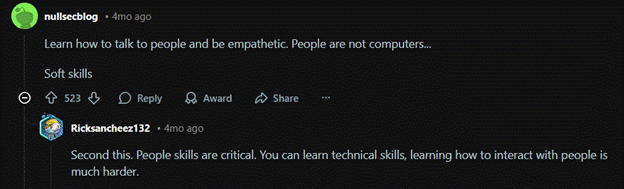
Here’s a list of some soft skills that you must develop as a cybersecurity professional:
- Critical Thinking
- Problem-solving
- Adaptability
- Interpersonal Communication
Developing the cybersecurity skill set to get hired faster
We’ve discussed the technical cybersecurity skills as well as the underrated non-technical ones that elevate your resume. However, you can only share these skills in your resume if you already acquire them and have a certain level of proficiency.
Here’s a simple how-to guide on developing these cybersecurity skills so that you can add them to your resume faster:
Focus on the Basics
You can start by building your foundation in the cybersecurity niche with online or readily available resources. Take lectures or certification courses to understand the basics and build entry-level skills.
Polish your technical expertise
Once you’ve understood the basics, strengthen your technical expertise by gaining a deeper understanding of security protocols and frameworks. Understanding the role of security tools and strategies is essential to mastering advanced skills like cloud security or incident response.
Gain experience with real-world projects
Cybersecurity recruiters won’t just recruit you based on the presence of cybersecurity skills in your resume. They want proof of hands-on experience by utilizing these skills in security projects. It is important to build a portfolio of projects to show your range and expertise.
Continuous Development and Adaptability
The field of cybersecurity evolves every minute with emerging threats and security techniques to counter them. Cybersecurity professionals need to stay updated with emerging trends through:
- Regularly reading security-related news, industry trends, and cyber threat reports.
- Consider upskilling to stay current and adaptive with diverse technologies to strengthen technical expertise.
- Attend security conferences or seminars to gain industry knowledge on security techniques.
Frequently Asked Questions
Q. What are the five pillars of cybersecurity?
The five pillars of cybersecurity are the set of principles that organizations abide by to maintain their security infrastructure. The pillars include:
- Confidentiality: It is one of the most significant pillars, and organizations focus on it by managing access control for data and assets. Cybersecurity skills like encryption are used to maintain confidentiality and prevent threats or attacks from cybercriminals.
- Integrity: Data integrity is another cybersecurity principle and is maintained by protecting personal data records from any unauthorized access. It is important to follow this principle to maintain client trust in an organization.
- Availability: Organizations maintain this principle by securing their networks, servers, and data from cyber threats. Moreover, they ensure that authorized users can easily access the data at any time or any place without intrusion.
- Non-repudiation: Organizations follow this principle by ensuring secure transmission of data or information to the selected receiver only. They maintain information security by monitoring secure transmission with no third-party modification.
- Authenticity: Organizations use this principle as a proactive security measure to avoid unauthorized access. They use authentication through one-time passwords, biometric verification, and temporary links to ensure that the user is authentic.
Q. What is the role and significance of SQL in cybersecurity?
SQL, or Structured Query Language, is used by software engineering professionals to manage databases, query data, and more. Knowledge and understanding of SQL is one of the crucial cybersecurity skills.
It helps in protecting databases from unauthorized access and attacks like data breaches or SQL injection. SQL skills can be used in the following situations:
- Conducting vulnerabilities assessment
- Protecting Sensitive Data by Access control
- Responding to a cybersecurity incident
- To generate Compliance Reports