
What to bring to an interview? Job seeker-friendly checklist!
Your career documents, including a resume and cover letter along with a portfolio, watch, questions for interviewers, excellent communication, and a positive attitude, are interview must-haves. Even professional references are an item that one should bring to an interview. However, this professional document should only be presented when requested.
Are you searching for interview success tips that can help you receive a job offer letter soon? Learn about the items to bring to an interview as well as those that should be ignored.
Stand out during the job interview with 13 interview must-haves
Following is a list of job interview essentials that you must bring to make a great first impression at an interview:
Professional folder
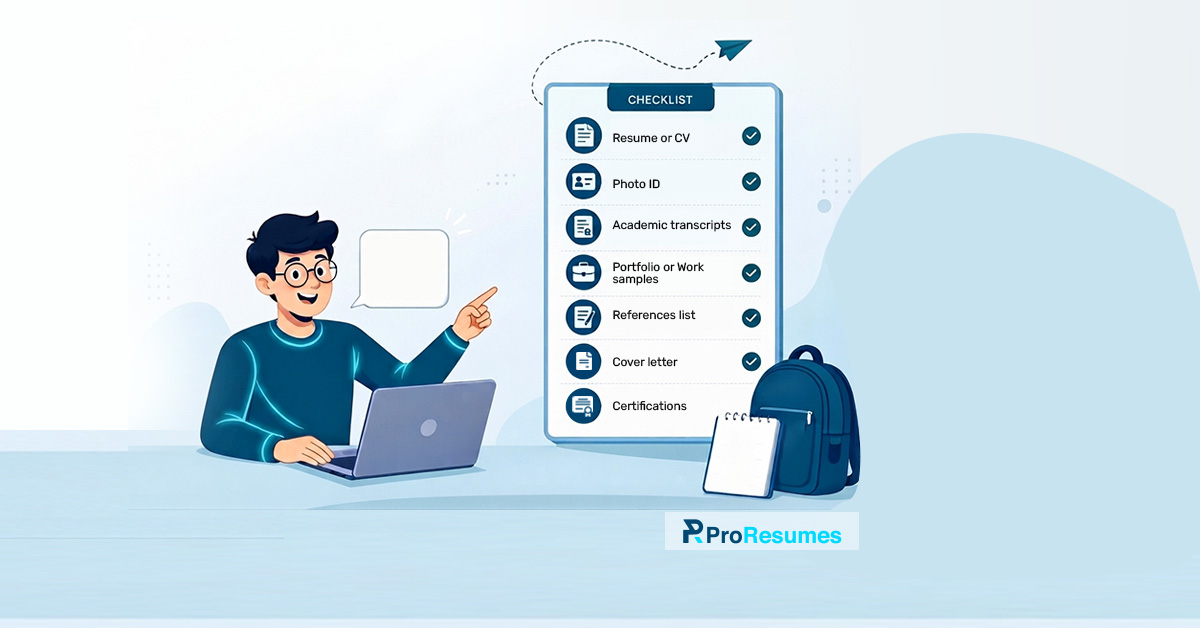
If you want to appear as someone organized and methodical, take a professional file or interview folder with you. The interview folder includes all the documents that you’re required to bring to an interview, including the following:
- Resume or CV
- Cover letter
- Portfolio or Work samples
- References list
- Academic transcripts
- Certifications
Pen and notebook
It’s okay to bring a notebook to an interview. Since you cannot take out your phone or laptop every time to note something important. Moreover, you can also utilize these tools to write down any dates, experiences, or anything you want to share during the interview.
Watch
A watch is one accessory that can help you manage the time and make a style statement as well. The candidates can keep track of time and answer questions in certain time frames.
Pro Tip: Experts advise candidates to take some time and listen to the recruiter’s question attentively for better understanding. Moreover, the optimal time for answering a recruiter’s question is within a 30 to 90 seconds timeframe. Many recruiters recommend spending 60 to 80 seconds while explaining your action using STAR method.
However, while having a watch as an interview must-have is good, it can also backfire sometimes. Since the recruiters and Human Resources (HR) Managers analyze every movement of a candidate. It is best to avoid negative impressions by glancing at your watch or wrist repeatedly.
Water bottle
Many interview candidates experience a dry mouth due to nervousness, and water helps with that. However, many organizations offer water bottles and other beverages during long interviews, which is why applicants avoid it.
But having a bottle of your own helps even when you go to an organization that doesn’t offer water.
Experts say that candidates should follow the interview etiquette while drinking water and avoid chugging. Moreover, they should ask the permission of the interviewer or HR manager before having a sip.
Multiple resume copies
People say it’s outdated. However, it is among the essential items to bring to an interview. Moreover, having multiple printed CVs and resume copies can be handy when meeting with multiple interviewers.
Job seekers should bring around five printed CV or resume copies to the interview.
Do you know that the applicant tracking system doesn’t let your resume pass? Check your ATS score with the help of online ATS resume checkers or get a manual critique from ProResumes.
Recommendation letters/ Professional References
Your professional references and recommendation documents serve as social proof of your credibility. However, it’s important to ask your references before sharing their details with your employer.
Identification documents
Many organizations don’t require these because of employment and labor laws. However, some might require the following documents, so just bring them to an interview with you:
- Identification card or Photo ID
- Driving license
- Passport copy
- Social security card
Questions for the interviewers
Before appearing in an interview, always come up with follow-up questions for the recruiters. This saves the applicant from any awkwardness and helps in gaining better details and making an impression.
Cover letter
This document is meant to expand on anything that you’ve briefly hinted at in your resume. This is the reason why you can bring a cover letter to a job interview. Moreover, job seekers should bring two or more copies of this document, such as a resume.
Proof of licensure and certifications
You can bring your attested certifications and licenses to show proof of your expertise. However, you should only hand it to the human resources department or HR manager if required. Sharing material that isn’t required by the hiring manager can also backfire sometimes.
Interview details
Interviewees can also jot down all the interview details in the notebook they want to bring to an interview. These details should include the following:
- Directions to the interview location or company address.
- Car parking area.
- Interview venue building and unit.
- Name of interviewer.
Positive attitude
You need to be very polite and positive throughout the interview to make a good impression on the interviewers. This should be among the most required things that you bring to either an in-person or virtual interview.
Emergency items
Job seekers bring these items to interviews to deal with any sudden incident or issue. Here’s a list of emergency items that you can have:
- Mouth freshener
- Wet wipes
- Tissue paper
- Phone charger
- Pain killer
- Concealer
- Hair clip
- Sanitizer
Interview preparation checklist for a virtual interview in 2026
Virtual interviews are different from in-person interviews as they are conducted on the phone or through video calls using video-conferencing tools. These include Zoom, Meet, Google Hangouts, and more.
If job seekers want to make a good first impression, then they should check out this virtual interview checklist:
Internet connection
Having a stable internet connection should be a top priority to consider during job interview preparation. Moreover, it is best to check this interview must-have beforehand to avoid any issues with the hiring manager or HR.
Laptop or computer
A desktop PC or laptop for your virtual interview should be in good condition. Moreover, it shouldn’t lag during the interview call since it can create a bad impression on the recruiter.
Webcam and microphone
Good visual and audio sharing devices are an important must-have to bring to a virtual interview. Your online interview setup won’t be perfect unless you test your devices’ functionality. Job seekers can also use external devices for better performance of their online interview setup.
Video conferencing software
The job seekers should test the software for a day or two and familiarize themselves with it during job interview preparation. This will help in avoiding any problems and boosting the interview confidence of a candidate.
Quiet background and setting
The interviewee should follow the interview etiquette during the virtual one as well. They should use a professional setting with natural lighting, a plain background, zero noise, and no distortion.
If they have a virtual interview on Zoom, then they could also use the professional backgrounds available in it.
Professional interview outfit
Even though you’re giving a virtual interview, dressing professionally is required. The interview candidate should choose dark-colored suits or formal dresses, preferably in blue or black.
Professional documents
These include all the documents that employers ask for during an interview, such as:
- Reference Material: This includes a copy of an ATS-optimized resume or CV, cover letter, job description, LinkedIn profile, and interview confirmation email.
- Pen and Notebook: The candidate can use these to jot down some points they want to discuss during the interview. Moreover, they can also write down stuff related to the target role during the interview discussions.
Follow up
Once you’re done with your virtual interview, send a quick follow-up email to the recruiter. You can take this opportunity to thank them for their time and share your availability for any further discussion.
What not to bring to an interview in 2026?
You’re already aware of the interview day checklist with items to bring to an interview. However, the following is a list of items that you should avoid bringing to an interview:
Chewing gum
Many people utilize mint chewing gum or candies as mouth fresheners. However, you won’t be making a good impression on the hiring manager if you keep on chewing during the interview. So, this should always be an item of the interview checklist that includes what one should not bring to an interview.
Strong perfume
Some interview candidates use strong and lingering scents to capture attention. However, one should only wear perfume while keeping in mind that people are often allergic to some scents.
Loud accessories
Many people utilize different accessories to make a personal statement. However, one should avoid excessive or funky jewelry items that can be loud and look out of place.
Food and drink items
You can have all the snacks or beverages before entering the meeting room to avoid any awkward situations.
Irrelevant documents
You should not bring any unrelated items to the interview because too much unnecessary information can also backfire.
Friends or family
Many candidates bring their kids or friends to the interview venue with them. This is not allowed because it seems unprofessional to the employer. Moreover, the candidate should appear alone to give an interview.
Negative attitude
It is not a tangible item, but your attitude plays a big role that influences the employer’s final decision. Even if you’re frustrated with a never-ending job search, give the interview positively.
Interview checklist for first-time job seekers
Here’s a list of some quick interview tips for beginner-level job seekers or fresh graduates:
- Start your interview preparation with company research.
- Arrive at the interview venue on time since punctuality matters for HR and employers.
- Dress for an interview in professional attire. You can also get dress code or interview outfit tips from the company culture.
- You should bring a list of common interview questions and rehearse them to reduce nervousness.
- Listen actively during the job interview to provide appropriate and strategic answers.
- Always maintain good and confident body language during the interview.
Frequently Asked Questions
Q. What to bring to an interview as a teenager?
You’re a teenager who’s either 16, 17 or even 18 and confused about what to bring to an interview. Appearing for an interview can be overwhelming for young job seekers who don’t possess much professional expertise.
However, teenagers can calm their nerves by checking that they have brought the following items to the interview:
- Academic achievements: Provide proof of your academic achievements by showing certificates in extracurricular activities related to the job. You can also give certifications of a course you’ve completed.
- Volunteering experience: Giving proof of part-time work or volunteering experience highlights responsibility and work ethic. You can also provide certifications for unpaid work experience to show your professional commitment.
- Relevant questions: The questions related to a target role are also among the must-haves that teenagers should bring to an interview. Here’s a list of questions that these job seekers can ask:
- Who will be my supervisor at work?
- What are your professional expectations from me for the next 2 or 3 months?
- Will I be paid on a monthly or weekly basis?
- Candidate’s resume: You should bring your resume to an interview without worrying about the length. You can also learn how to prepare a resume without work experience.
Q. Can an interview candidate bring food to the interview?
Have you ever wondered about bringing fast food to a job interview? No, right! Because even if you did, you shouldn’t bring any food items to your interview. Instead, job seekers should have a well-balanced meal before the session.
You can have a little snack before the interview. However, don’t take the food item into the meeting room because it is considered an interview red flag.
Moreover, some organizations and workplaces offer candidates some snack or beverage options. Job seekers can gladly accept the employer’s offer if they feel hungry.
Q. What should fresh graduates bring to an interview?
Then, fresh graduates lack work experience when it comes to mid-level or senior-level job seekers. However, they can bring the following items to an interview:
- Resume: Like teenage job seekers, fresh graduates should include their academic achievements or experiences in their resume.
- Academic transcripts: The graduates should bring printed and attested copies of their degree certificates and transcripts.
- Work portfolio: This may include their freelance work samples, teaching assistant experience, volunteering experience, and more.
- Personal ID: This may include a Photo ID, passport, or driving license copy for identification purposes.
- References list: This may include contact and other details of the references, like professors, faculty advisors, and more.