
How Informational Interview Preparation Can Set You Up for Career Success
Your career success doesn’t depend on luck. It requires complete advice and a roadmap for optimal results in a professional journey. Your career preparation begins in school, and career counselling plays an important part in selecting the right direction. Likewise, your new job success requires informational interview preparation before the actual job interview. Whether you are a student or a professional, this conversation is helpful at all levels of your career.
Have you ever heard of informational interviews? Have you participated in mock interviews before the actual interview? Do you know how informational interviews give you insider insights, build confidence, and strengthen your job search? Unsure about the types of interviews? Let’s talk, learn, and thrive with ProResumes.
What is an Informational Interview?
An informational interview is an informal meeting or conversation to gather professional knowledge and experience within the targeted field. During this meeting, you can ask what skills recruiters look for and what major questions they ask during an interview. Moreover, you can remove confusion about any concept in your professional industry.
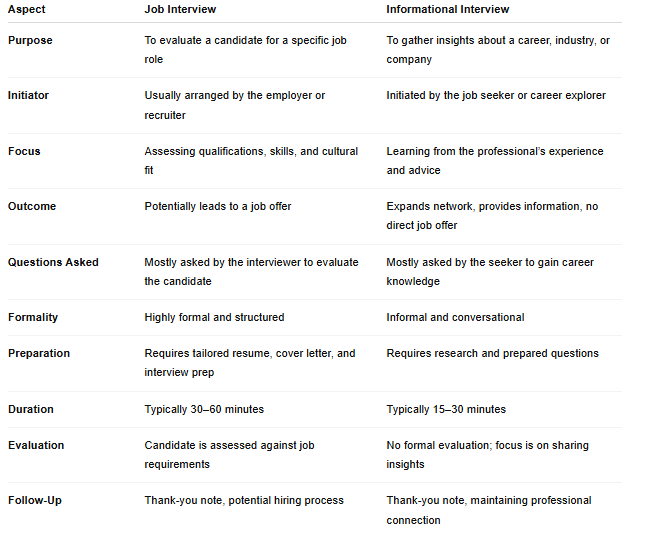
Job Interview vs. Informational Interview
If you are stuck with the question of what the major difference is between an Interview and an Informational Interview. An informational interview is preparation for a real interview by learning from the industry experts or recruiters within your professional network.
On the other hand, an interview is conducted by the company’s HR department to verify your professional experience and accomplishments mentioned in your resume, per their selection criteria.
Pro Tip: Practice makes a person perfect. Informational interviews minimize confusion, help you learn real interview questions, and perform well in front of recruiters.
Who can help with an Informational Interview?
When you think of learning new things, choosing the right mentor is the key to success. Before requesting help from anyone to improve your industry knowledge. You need to know to whom you can request an informational interview and how you can find them.
Best people to ask for an Informal Career Talk
- Professionals in Your Target Industry & Role
- Alumni from Your School, College, University, or Program
- Hiring Managers and Industry Recruiters
- Employees and Leaders at Companies You Admire
- Career Coaches, Mentors, and Digital Career Strategists
- Industry Leaders or Professionals on LinkedIn
How to find the right people for the right job?
- Use LinkedIn’s Search Filters
- Leverage Alumni Networks
- Attend Networking Events
- Ask for Referrals
- Explore Professional Associations
- Use the Company Career Page
Pro Tip: The job market is becoming more competitive than ever. Without the help of career experts, you may get stuck in different areas and lose potential job opportunities.
How to ask for an Expert’s Help?
Your communication is key to winning the trust of professionals in free learning services. You can take help from the people who recommended them to you. You can request them to introduce you. If you are thinking of where to reach out to them, it depends on the contact information available to you. You can reach out through Email, WhatsApp, LinkedIn, or any other available communication channel.
6 Things to consider before reaching out to industry experts for help.
- Choose the Effective Communication Channel
- Write a Personalized, Professional, and Polite Message
- Clearly State Your Purpose
- Offer Flexibility
- Follow-up Message if needed, but Professional.
- Express Gratitude
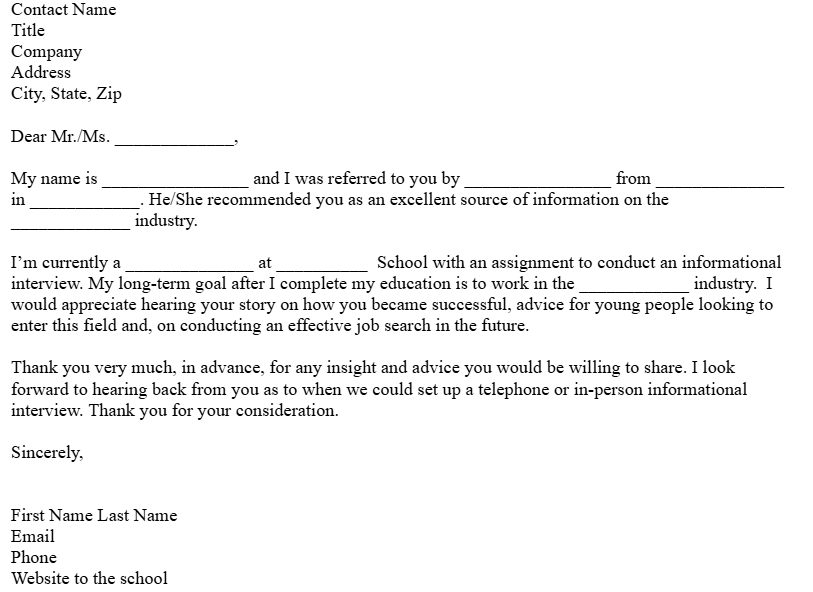
Scripts for different Communication Channels
Phone/WhatsApp Message

Email Message
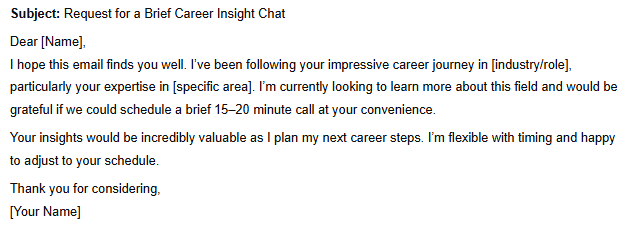
LinkedIn Message

ProTip: You got the reference, so don’t make a bad first impression by reaching out in a rush. Take your time, craft a professional message, and send it during their availability. Avoid making direct calls, leave a message, and wait for their response. Don’t follow up earlier than 48 hours.
Things to do before an Informational Conversation
- Research the Professional
- Understand the Industry and Role
- Prepare and Write Your Questions
- Set a Clear Objective
- Plan the Logistics
- Prepare Your Introduction
- Bring Necessary Materials
- Dress Professionally
- Plan for Networking Follow-up
What questions to ask in an Informational Interview?
Prepare and rehearse your question list. You should have the right questions ready to make the most of the conversation. You can gain valuable insights by asking the following questions aligned with targeted industries, including legal, business, IT, AI, and customer service etc.
- Industry Insights
- Career Growth & Opportunities
- Upskilling & Job Search Tips
- Networking & Advice
- Resume Optimization Tips
- Job Application Submission Guidelines
- Interview Tips & Recruiter Criteria
- Company Culture (If targeting the same company)
Pro Tip: Don’t ask about their salary or personal matters. Keep yourself professional and polite throughout the session
Where to organize a Career Information Interview?
You need to plan and choose the right place for informational purposes to make the conversation more comfortable and productive. Avoid noisy or crowded areas and try to ease the mentor.
- Coffee Shop or Cafe
- Virtual Meeting (Zoom, Teams, or Google Meet)
- Office Visit
- University Career Center or Library
- Networking Events or Career Fairs
- Phone Call (Keep this as the last option)
How long should an Informational Interview Last?
It depends on your communication and understanding with the person. It’s important to respect the interviewee’s time. A 30-minute session is a standard for these conversations. An interviewer can extend the timelines, but you need to follow the set timeframe.
Pro Tip: It’s best to decide the timeframe during your first interaction via phone or email. Aim for the standard 20 to 30 minutes and ask the major questions at the beginning of the conversation to gain more value and clear your doubts.
Can you ask for Professional Networking or a Job?
Sure, you can ask the interviewer to help you build your professional network or refer you for a job. However, this should be asked only after you’ve covered your major questions. Asking such questions directly at the start of the conversation may leave a negative impression.
Can an Informational Interview lead to a Job?
The primary goal of this conversation is to learn and thrive in the selected field. But sometimes you perform well in asking questions that may impress the interviewer to offer or refer you for a job. This can lead to a direct job offer if your informal interviewer is the hiring manager of the company in your targeted role or industry.
Benefits of Informational Interviews for Students and Professionals?
These networking interviews are ideal for seeking high-level advice, authentic information, and gaining professional referrals. Getting hired faster is not about applying for 100 jobs in a day. This process requires a complete job hunting strategy, including creating an ATS-friendly resume, optimizing a LinkedIn profile, building relationships with professionals, and practicing mock interviews.
Pro Tip: Life is a continuous process of learning, and in your professional journey, if you stop upskilling, you will not be able to achieve your goals. What makes this so easy now is that you can say you are a student, and you need this for class.
How to Follow Up with an Interviewer?
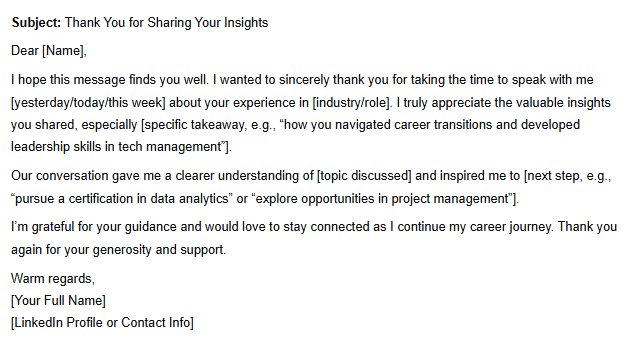
Following up with the interviewer is just as important as the conversation itself. Don’t forget to send the professional follow-up email with a thank-you note to the interviewer.
Sample Follow-Up Email
Conclusion
An informational interview is more than just a professional conversation. Whether you’re a student exploring future paths or a professional planning your next big move, conducting these networking or learning sessions can set you apart from the rest of the competition.
Remember, career success is not about luck; it’s all about strategy, preparation, and continuous learning. Stay connected with ProResumes.io to learn the latest job market trends and thrive with informational interviews for career success.